A structured approach to business growth and getting where you need to go.
Every Growth Architecture engagement begins the same way; with a genuine effort to understand the business completely before anything is designed, recommended or built.
Book a Discovery Call
Before building for business growth, we look at where you actually stand.
Businesses that come to Nexus 360 are either growing or want to grow, but growth has started to create pressure rather than just opportunity. Before any system is designed or any recommendation is made, we spend time understanding the business properly. That means looking at what’s working, what’s under strain, where the gaps are, and what’s slowing things down. Only then does the right path forward become clear.
We take a structured approach, reviewing the business across four key areas to understand where improvements to systems, processes and platforms will have the greatest impact on sustainable business growth. That approach was developed by founder Mark Shevill, drawing on 25 years of experience in complex operational environments across organisations including RBS, Thomas Cook and English Heritage.
What’s Working
The strengths already delivering results: the processes, systems and people that form a solid foundation worth protecting and building on rather than replacing.
What’s Stretched
The areas that function today but are showing signs of strain: processes that depend on individuals, systems that are reaching their limits, or capacity that is starting to constrain what the business can take on.
What’s Disconnected
The gaps between systems, teams and information, where data doesn’t flow properly, decisions get made without the full picture, or different parts of the business operate without visibility of each other.
What’s Challenging
The things that are actively slowing the business down, manual processes that consume time, tools that create friction rather than remove it, or bottlenecks that keep landing back with the same person.
How Growth Architecture works.
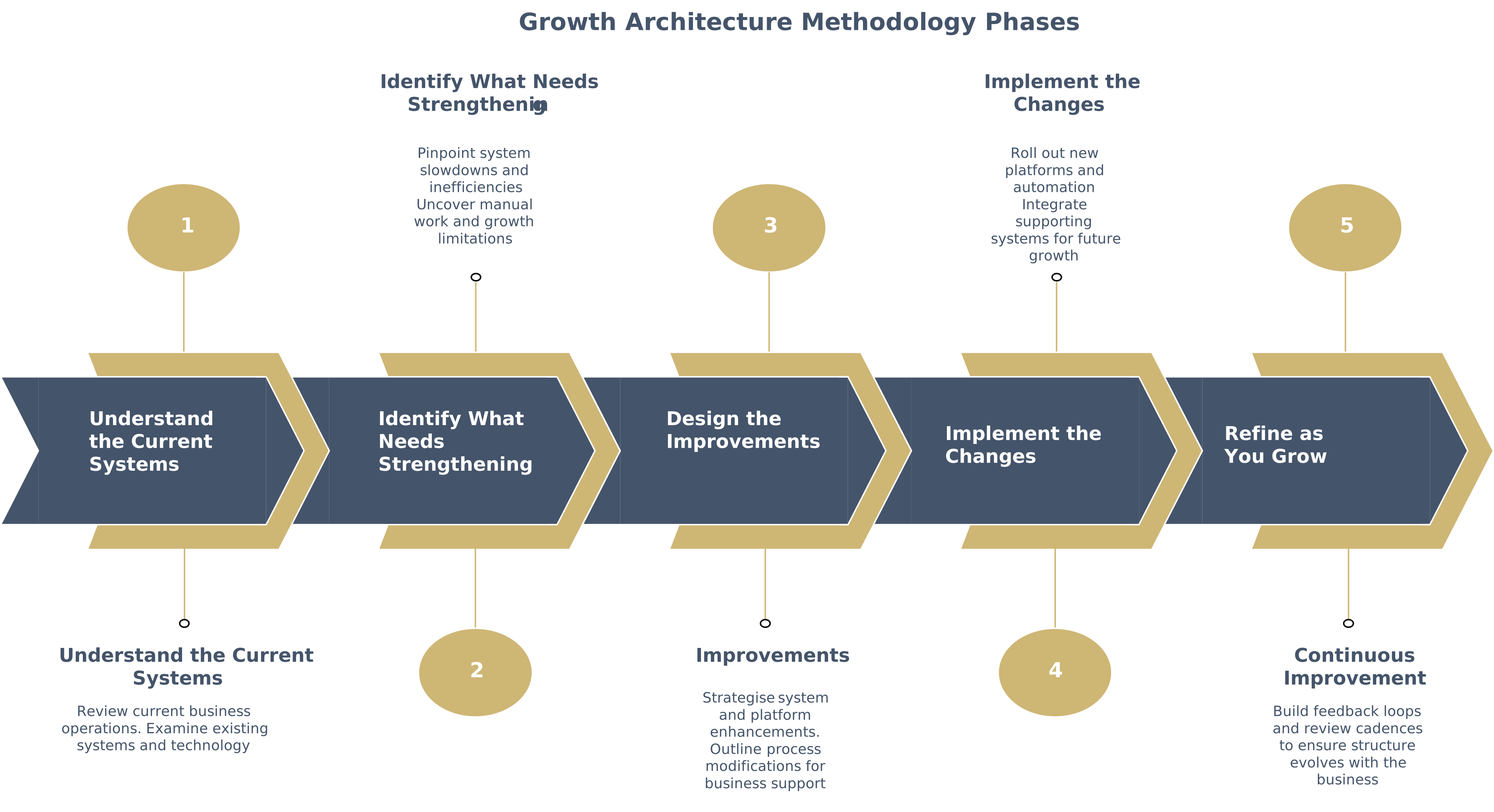
Growth Architecture follows a clear sequence of steps, with each stage improving the systems and technology that run your business.
It’s a practical process focused on strengthening the CRM, automation, platforms and operational systems behind your business.
The goal is to move your business from the way it operates today to a setup that can support the next stage of business growth.
1
Understand
We start with a Discovery Workshop, a structured conversation that maps the business properly. Revenue, pipeline, systems, team structure, what the owner wants the business to look like in one, two and three years. This isn’t a sales conversation. It’s a genuine effort to understand the business completely before anything else happens.
2
Design
From that understanding, we reverse-engineer the roadmap. What needs to change, in what order, and why. Each improvement is sequenced deliberately, so the business can absorb change without disrupting what’s already working. The output is a clear, documented plan that both sides understand and agree on before implementation begins.
3
Build
Implementation is hands-on. We work alongside the business to build the commercial, operational and digital system the roadmap describes, CRM, automation, website, reporting, marketing infrastructure, process design. Introduced at a pace the business can absorb, with each element connected to the ones that follow.
The result is a business that works better and a team that understands why.
What changes when systems support business growth.
When the right systems are in place and connected properly, the whole business feels different, calmer, more visible, more in control. These are the changes clients notice first.
A clear picture of the business
Decisions stop being based on instinct and incomplete information. The business has real visibility of pipeline, performance and capacity, so the right calls get made at the right time.
A roadmap that gets followed
Improvements are introduced in a deliberate sequence, each one building on the last. The business evolves without disruption and the team knows what’s coming next and why.
Systems that work together
CRM, automation, website, reporting and operations all connected. Information flows properly across the business instead of sitting in disconnected tools that don’t talk to each other.
Less time on the wrong things
Manual processes, duplicated effort and repetitive tasks are reduced or removed. Research suggests roughly a third of sales and operations tasks can be automated with existing technology – time that adds up quickly when it is redirected properly. The team spends their time on work that moves the business forward rather than work that keeps it standing still.
A business that runs without you in the middle of everything
With the right structure in place, decisions get made at the right level. The founder stops being the bottleneck and the business can grow without requiring proportionally more of their time.
Less Duplication
Improved systems reduce duplicated work and unnecessary manual tasks.
With stronger systems in place, the business can grow without creating operational strain.
This is the difference between companies that grow fast and companies that grow well.
The starting point for business growth is a conversation.
Before any proposal is written, any system is designed or any commitment is made, Nexus 360 sits down with the business to understand it properly. That conversation is structured, honest and straightforward, covering where the business is today, where it’s trying to get to, and whether there’s a genuine fit between what’s needed and what Nexus 360 delivers.
If there’s alignment, we design the Growth Architecture roadmap together. If there isn’t, the business leaves with a clearer picture of what it actually needs – and that has value in itself.
Nexus 360 Limited is a registered UK business and was recognised as Most Promising New Business at the Barnsley and Rotherham Chamber of Commerce Business Awards 2025.
Frequently Asked Questions About Our Approach to Business Growth
What is the Nexus 360 approach to business growth?
Our approach is a deliberate, three-step method – Understand, Design, and Build. We start with a discovery workshop to map your current setup, then design a sequenced roadmap based on real gaps. During implementation, we connect your CRM, automation, and reporting so the business runs as one connected model rather than relying on fragmented tools.
Do growing businesses really need a proper CRM?
Usually yes, especially once tracking leads and customer history becomes a burden in spreadsheets. A dedicated CRM system centralizes your data and removes blind spots. As noted by the US Chamber of Commerce, this centralized visibility is what allows teams to automate routine tasks and manage customer journeys efficiently.
How do we know if our company is a fit for Growth Architecture?
Fit is strongest when a business faces growth pressure, operational strain, or disconnected systems that cause delays. It is also common when a founder has become an operational bottleneck. We start with a clear, honest discovery conversation to confirm alignment before any roadmaps are designed.
How long does it take to implement new operational infrastructure?
There is no standard timeline, as it depends heavily on your current data health and the complexity of integrations. We build and release updates at a pace the business can absorb. Strategic research from firms like McKinsey emphasizes that starting with smaller, focused pilots and expanding in phases is much safer than attempting an all-at-once launch.
How much does a structured systems implementation cost?
Pricing is entirely dependent on the scope of the required configuration, integrations, and team training. Because we focus on what you actually need, we avoid fixed, off-the-shelf pricing. A clear and precise investment level is established after the discovery phase, ensuring no resources are wasted on unnecessary features.