How Nexus 360 works
Understanding how Nexus 360 works begins with a clear look at where your business is today, where it needs to go, and what is standing in the way.
Scaling a company is rarely simple. Systems strain, decisions become heavier, and founders often carry too much. As your business growth partner, we help you make sense of the complexity and build a sequenced roadmap for change. We have worked with 40+ SMEs across automotive, finance, education, hospitality, and professional services.
Book a Discovery Call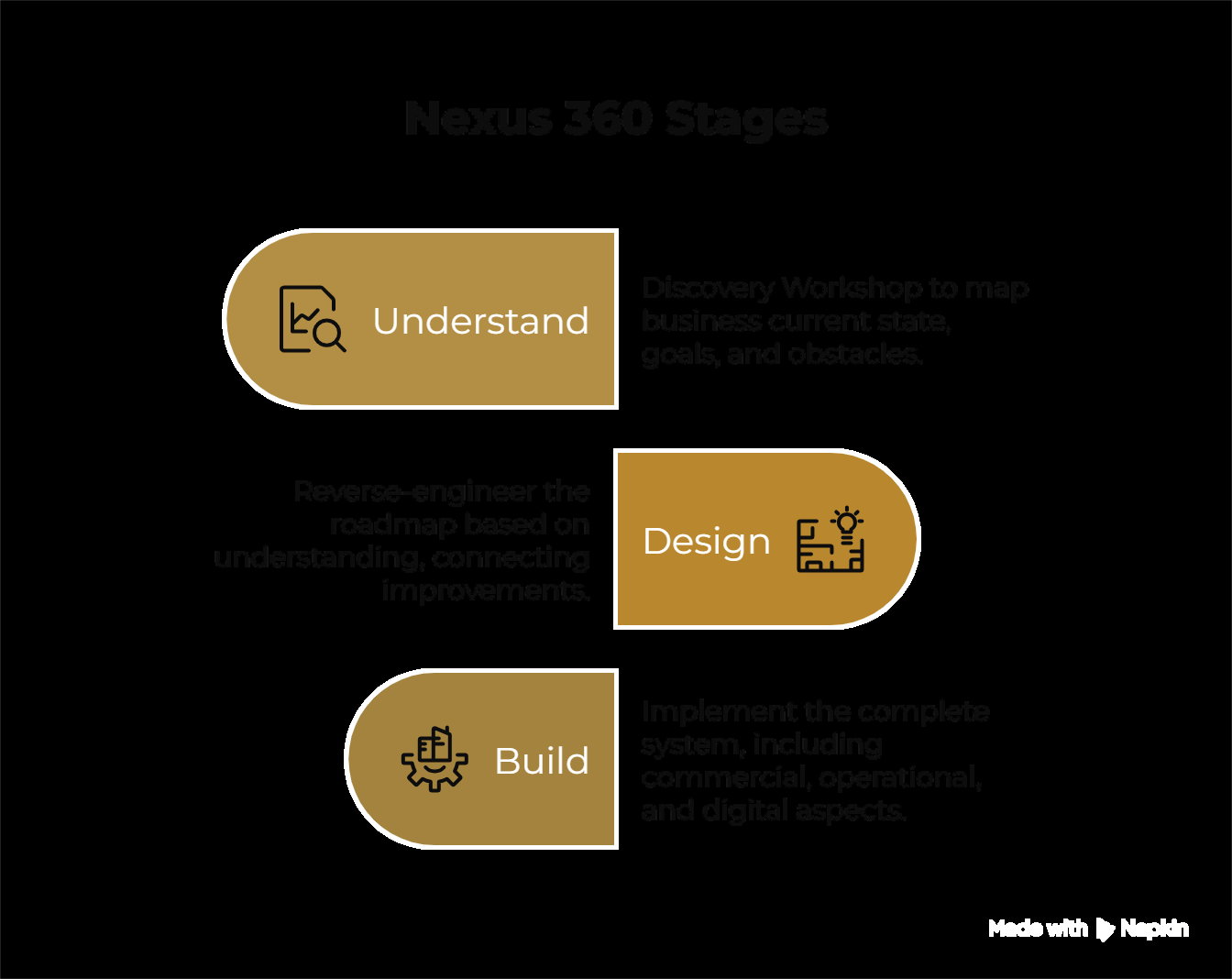
Sustainable business growth partner strategies. Is your business ready?
When growth starts to strain
Every business reaches a point where the way it operates stops being sufficient for where it is trying to go. The processes that worked at one level of revenue start to crack at the next. The team that was the right size last year is stretched this year. The UK SME Digital Adoption Taskforce report identifies a persistent gap between growth aspiration and execution – and this is where most businesses get stuck.
Scaling for long-term progress
The strain that comes with scaling is a sign the business is moving forward. The ones that come through it well recognize it early and build the right structure before it becomes a problem that is harder to fix.
The familiar pattern of how Nexus 360 works
Most businesses grow in stages. As sales increase, various systems get added along with the hiring of people. Processes are written and added to. While it works initially, continual growth begins to break them.
More Meetings
Keeping everything aligned takes more time. Coordination that used to happen naturally now needs a calendar invite.
More Firefighting
The week stops being planned and starts being reactive. Leaders spend time on problems rather than progress.
More Manual Work
Processes that should run themselves still depend on manual work. When your team is busy, things slip.
Founder Bottleneck
Decisions that should be made by the team still land with one person. The business can only move as fast as they can.
The pattern is familiar because it is almost universal. The difference is what happens next.
Seven pillars of a business growth partner strategy.
These foundations are what every scaling business needs – not all at once, but moving forward together. When one falls behind, the effort required for growth doubles. The British Chambers of Commerce Delivering Growth report identifies technology adoption, skills, and business dynamism as the core levers for scaling UK firms – these seven pillars cover exactly that ground.
Direction
A clear sense of where the business is going, so every decision, investment, and hire points in the same direction.
Financial Strength
Financial control to fund growth confidently, without second-guessing whether the numbers stack up.
Demand Engine
A repeatable system for generating pipeline, so the business does not rely on referrals or luck to find the next client.
Revenue Structure
Income that is predictable, diversified, and not dependent on a few clients or one revenue stream.
Systems that allow the business to take on more work without depending on more hours or more people.
Delivery Capacity
The ability to fulfill promises consistently as volume and complexity grows.
Leadership & Governance
Accountability distributed across the team so the business runs whether the founder is in the room or not.
Signs your business needs a growth partner.

Revenue outpaces operations
Winning more clients than you can serve properly. Delivery suffers, reputation follows, and growth that felt like success becomes a liability.

Systems Outpace Direction
Tools and processes are built for a strategy that has not been defined. Investment goes into infrastructure serving the wrong destination.

Ambition outpaces leadership
The business grows faster than the team’s ability to make independent decisions. Everything funnels back to one person, creating a tight bottleneck.
Where Nexus 360 comes in
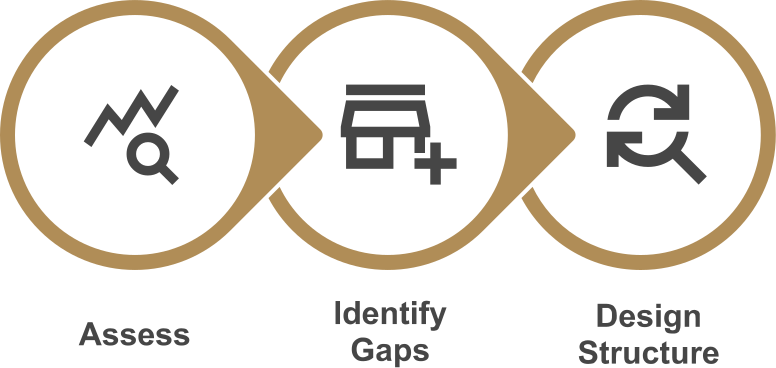
Nexus 360 is led by Mark Shevill, who brings 25 years of enterprise delivery experience across organisations including RBS, Thomas Cook, and English Heritage. We assess your foundations, identify gaps, and design a practical roadmap – hands-on and tailored to your specific situation. Every improvement strengthens the whole business rather than just patching problems.
Nexus 360 was Highly Commended for Most Promising New Business at the 2025 Barnsley & Rotherham Chamber of Commerce Business Awards.
The starting point is a conversation. A clear-eyed look at where your business stands and what moving forward actually involves.
Frequently Asked Questions
What does a business growth partner do?
We look at what is creating friction in your operations and help you remove it. Rather than just offering high-level advice, we act as a business growth partner to design and build out your internal infrastructure. This involves stepping in to sequence a roadmap for your CRM, automation, and financial reporting. You can read more about our straightforward approach to see the exact steps.
When should a growing company bring in outside help?
The right time is usually when growth creates operational strain instead of natural momentum. Many companies reach a point where founder bottlenecks, disconnected software, or endless manual work begin to slow things down. Data from McKinsey shows that scaling often stalls when businesses fail to mature past founder-led models. If your current systems are cracking under your latest wins, exploring how Nexus 360 works is a sensible next step.
How long does an engagement typically take?
There is no universal schedule because every business starts from a different baseline. The timeline shifts based on your current data health, the complexity of your tool stack, and your team’s capacity to absorb change. We define initial milestones and deliverables up front so you always see measurable progress without your daily operations grinding to a halt.
What deliverables should I expect from this process?
Everything starts with a Discovery Workshop to map out exactly where your foundations are weakest. From there, we hand over a sequenced roadmap and move straight into hands-on building. This results in tangible improvements to your CRM, automation flows, and reporting. We focus on delivering implemented systems rather than leaving you with a theoretical diagnostic report.
How are costs structured for your services?
We do not provide generic, off-the-shelf pricing. The investment required is mapped out after our initial discovery phase, based entirely on the specific build work your business needs to scale safely. Our primary goal is to install an infrastructure that yields sustainable business growth, making sure your capital goes directly into fixing operational limits.