- Yes, introducing a CRM system early helps organise contacts and manage relationships before operational pressure builds.
- While spreadsheets work initially, they rely on heavy manual effort that makes it easy to lose track of opportunities as you grow.
- The safest approach with a small business CRM is starting simple to improve follow-up consistency before adding complex automation.
Do Small Businesses Need a CRM?
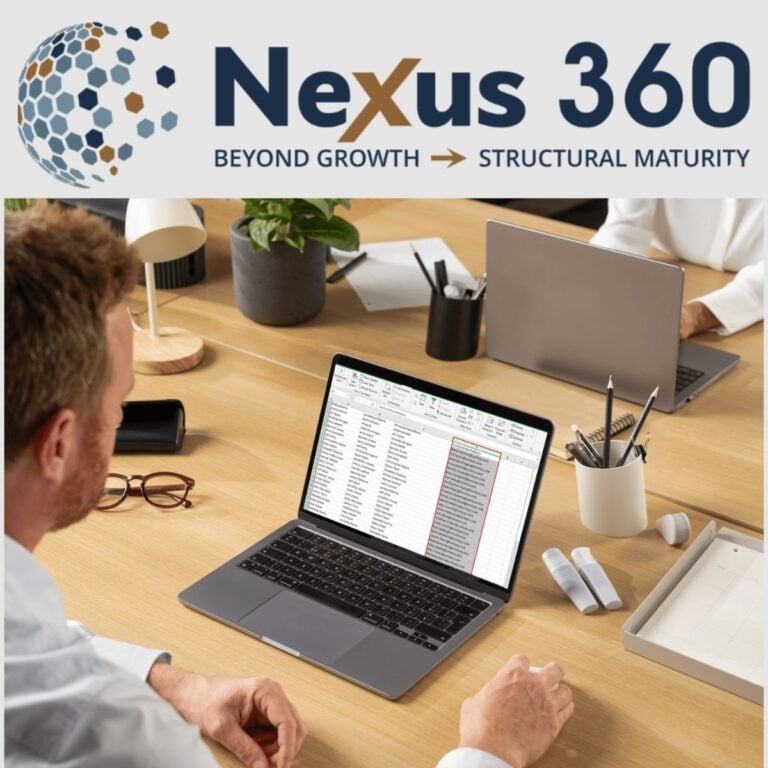
“I keep all my contacts in Excel. I collect business cards at networking events, add them into a spreadsheet, mark who I’ve emailed, who replied, and then every so often I go back through it all and work out who I should follow up with.”
That’s a more common response than most people realise. When entrepreneurs ask if they should use a small business CRM, they are usually looking for a way to stop things slipping through the cracks. It is a question the team at Nexus 360 encounters regularly, drawing on over 20 years of experience working with SMEs across the UK.
Then comes the next part:
“My business probably isn’t big enough for a CRM.”
The spreadsheet works; that’s why businesses keep using it.
It feels familiar and is easy to access, and when the business is smaller, it usually does enough to keep things moving. The challenge comes later, when more contacts are added, more conversations take place, and more information starts sitting across different places.
More time begins going into checking emails, chasing information, remembering conversations, working out who needs following up, and trying to keep track of opportunities as they move through the business.
It’s at this point that, as a business owner, you start looking at CRM properly, because structure becomes more important as the business grows.
When a Small Business Needs a CRM
One of the biggest misconceptions around CRM is that it’s only valuable once a business reaches a certain size. The benefits appear much earlier than that.
Most small businesses grow because they are good at relationships. Customers trust them, conversations are personal, and people care about the service they provide. A CRM doesn’t replace relationships or turn a business into a corporate process; it aids the development of a relationship.
The difficulty comes when the volume of conversations, enquiries, quotes, follow-ups, suppliers, customers, and ongoing work all start moving at the same time. That is where structure starts becoming important. The businesses that stay organised as they grow are usually the ones that introduce systems early enough to support the growth, rather than waiting until operational pressure forces change later.
A well-structured CRM helps nurture and protect relationships. Instead of relying on memory, scattered notes, inboxes, or spreadsheets, the information sits in one place, communication becomes more consistent, and opportunities become easier to manage properly from the first conversation through to the final sale and beyond.
For many businesses, that value exists long before they realise it.
Research from the UK Department for Business and Trade (2025) found that over 90% of SMEs adopting digital technology reported positive outcomes, with time savings most frequently cited. CRM sits naturally within that picture.
CRM Isn’t Just for Large Businesses
There’s a reason many small businesses assume CRM systems are designed for larger companies. A lot of what they see online looks built around sales teams, departments, reporting structures, pipelines, dashboards, and features they struggle to imagine themselves ever using.
So, they assume:
“That’s for bigger businesses, not ours.”
The reality, however, is usually very different.
Some of the biggest benefits a CRM brings are the things smaller businesses value most: keeping track of conversations properly, following up with people consistently, managing relationships better, reducing admin time, and making sure opportunities stay visible instead of disappearing into inboxes or notebooks.
The size of the business is not the deciding factor. It is much more about how important relationships, organisation, follow-up, visibility, and consistency are to the way the business operates. A business with a handful of enquiries each week can still benefit massively from having structure underneath it. In many cases, introducing good habits early makes growth much easier later because the systems supporting the business grow alongside it.
CRM shouldn’t be seen as a “big business system” but more as a practical way of running the business more effectively day to day.
The SME Digital Adoption Taskforce reported that adopting individual digital tools can be associated with firm-level productivity improvements of between 7% and 18%. For a small business, that represents a meaningful return on a relatively modest change.
Small Business CRM vs Excel
Excel is brilliant at what it was designed for. Most businesses already use it in some form, and for a while, it feels like the easiest place to keep information organised. Contacts sit in rows, dates are added into columns, colour coding starts appearing, and over time the spreadsheet gradually becomes the centre of customer management without ever really being designed for it.
The challenge is that spreadsheets rely heavily on manual effort. Every update depends on somebody remembering to add it. Every follow-up depends on somebody checking it. Every conversation, quote, email, task, reminder, and opportunity must be updated manually for the information to stay accurate.
That works when the volume is low.
As the business grows, though, spreadsheets usually become harder to manage rather than easier. Different versions start appearing, often in different places, information becomes outdated, conversations sit across multiple locations, and visibility depends heavily on who maintains the spreadsheet and how disciplined they are with updating it.
A CRM changes that dynamic completely.
Instead of acting as a static spreadsheet, it becomes an active system underneath the business. Conversations, emails, follow-ups, notes, tasks, reminders, and opportunities all sit together around the customer or contact record, giving the business a much clearer view of what is happening and what needs to happen next.
The goal of a business using CRM is to provide a more reliable way of managing and nurturing relationships.
The U.S. Small Business Administration notes that CRM systems help consolidate customer information that would otherwise sit scattered across different inboxes and systems. That kind of fragmentation is one of the most common inefficiencies affecting growing businesses.
What a CRM Should Actually Help With
A good CRM should make the business easier to run.
That sounds obvious, but it’s where a lot of businesses get put off because many CRM systems are introduced with far too much added too early: huge feature lists, endless customisation, complicated dashboards, and processes that feel completely disconnected from the way the business operates.
For a small business, the value is usually much simpler than that.
Knowing who has been contacted and when. Keeping follow-ups consistent. Having visibility of opportunities currently sitting in the pipeline. Storing conversations, emails, notes, and customer information in one place instead of across multiple systems and inboxes.
Beyond that, automation starts removing repetitive admin tasks that gradually consume more time as the business grows.
Follow-up reminders can be scheduled automatically. Enquiries can be routed into the right place instantly. Emails, tasks, and communication history can sit directly against the customer record instead of relying on somebody searching through inboxes, trying to piece conversations back together.
The result is usually less manual effort, more consistency, better visibility, and a business that feels more controlled as it grows.
That’s where CRM starts becoming valuable, because it supports the way the business already works and gradually removes friction from the day-to-day operation.
Recent insights from the Canadian Federation of Independent Business (2025) suggest 82% of SMEs view tools like CRM and automation as important for improving customer service. The value is widely recognised, even when adoption still lags behind.
Starting Small Usually Works Best
One of the reasons businesses avoid CRM is the assumption that everything must change at once. New systems, new processes, new ways of working, team training, automation, reporting, dashboards, integrations. It can feel like a huge operational shift before anything has even started, but the best CRM implementations don’t begin that way.
Businesses benefit far more from starting with the basics and building from there. Getting contacts into one place properly. Improving follow-up consistency. Making enquiries easier to manage. Creating visibility around active opportunities and customer communication.
Once that foundation is in place, the next stage becomes much clearer.
Automation can then be introduced gradually around the areas creating the most manual effort. Processes can become more structured over time. Reporting becomes more valuable because the underlying information is more accurate and consistent. That roadmap approach usually leads to far better adoption internally as well.
People have time to adjust to the changes, the business continues operating normally, and each stage delivers visible value before the next layer gets introduced. The businesses that get the best long-term value from CRM are rarely the ones trying to implement everything immediately.
They’re usually the ones building structure steadily underneath the business as it grows.
One industry case study from 2026 describes a training business that centralised its leads and automated follow-up, later reporting 200 new clients and a 60% increase in revenue. These are vendor-reported figures, so individual outcomes will vary. But the pattern holds: structure applied early tends to benefit growth over time.
Putting Better Structure Underneath the Business
Businesses eventually reach a stage where relationships, communication, follow-up, and opportunity management become too important to rely purely on memory and manual effort.
Growth naturally creates more conversations, more opportunities, more moving parts, and more responsibility to manage those relationships consistently. The businesses that handle that well are usually the ones that introduce better structure before things start becoming difficult to control. That’s where CRM becomes really valuable as part of the operational foundation underpinning your business evolution.
Customer information becomes easier to access, communication becomes more consistent, follow-ups become more reliable, and visibility improves across the entire customer journey. For small businesses especially, that structure creates something incredibly valuable.
Confidence.
Confidence that opportunities are being managed properly, confidence that follow-ups are happening consistently, and confidence that growth is being supported by systems capable of keeping up with the business as it moves forward.
Managed carefully, other systems and processes can be built around the CRM solution so it becomes pivotal to your day-to-day management.
Nexus 360 was recognised at the 2025 Barnsley and Rotherham Chamber of Commerce Business Awards, receiving a Highly Commended for Most Promising New Business. That recognition reflects the practical demand for CRM and operational infrastructure support among growing UK businesses.

Growth Demands More Than Memory
A spreadsheet can hold contact information. It can’t manage relationships. It can’t tell you which opportunities are active, which conversations have gone quiet, who was supposed to follow something up last week, or which customer hasn’t heard from you in three months because things became busy.
Businesses that want to grow effectively and efficiently stop looking at CRM as “software” and start looking at it as operational infrastructure underneath the business.
The interesting part is that most businesses don’t realise how much time, energy, and opportunity is being lost to manual processes until they experience something more structured.
When it is implemented, suddenly follow-up becomes consistent, visibility improves, relationships are easier to manage, opportunities become easier to track, and the business feels more organised as a result.
That’s why CRM usually becomes more valuable the earlier it is implemented, which is often sooner than most small businesses expect.
FAQ
Do small businesses really need a CRM?
Most small businesses benefit from a CRM far earlier than they expect. A CRM helps organise customer information, improve follow-up consistency, manage relationships more effectively, and create better visibility across opportunities and communication.
Is Excel enough to manage customer relationships?
Excel works well for storing information, but as businesses grow it usually becomes harder to manage conversations, follow-ups, communication history, reminders, and opportunities consistently through spreadsheets alone.
What are the biggest benefits of a CRM for a small business?
The biggest benefits are usually improved organisation, better visibility of opportunities, more consistent follow-up, reduced manual administration, and having customer communication stored in one place.
When should a business start using a CRM?
Many businesses wait longer than they should. Introducing a CRM earlier often helps businesses grow in a more organised and scalable way rather than waiting until operational pressure forces change later.
Does a CRM replace personal relationships with customers?
A good CRM should strengthen relationships, not replace them. It helps businesses manage communication more consistently and reduces the risk of opportunities or conversations being lost as the business grows.
Does CRM implementation need to be complicated?
No. Most successful CRM implementations start small, focusing on improving visibility, organisation, and follow-up before introducing more advanced automation or processes later.