At Some Point, Business Systems Are Not Working Together
We all have the systems that were put in place at some point in the natural evolution of the business, systems that worked well when they were first introduced and did exactly what they were supposed to do at the time. How many systems or standalone applications do you have to run your business?
As the business grows though, more systems tend to be added. Each one solves a problem, each one has a purpose, and on their own they all still make sense. At some point, businesses reach a stage where their systems are no longer working together in a way that supports growth.
Over time, you find yourself working across multiple systems that are all doing different jobs, but the way they fit together isn’t always as straightforward as it once was, and that’s usually where you start to notice effort being duplicated. Different members of the team begin to develop their own ways of working, often finding ways to work around the systems rather than through them, because using them as they are has become more difficult than it should be.
Does that resonate?

What That Looks Like in Practice
When you take a step back and look at it, the focus naturally begins to move away from the individual systems and towards how the business is set up to use them. It becomes less about what each system is doing on its own, and more about how information moves between them, how consistently that happens across different people and different parts of the business, and how easy it is to understand what is going on without having to piece it together manually; this is when there are data silos and disconnected systems.
In some cases, that way of working develops over time and things begin to feel more aligned as the business grows, but in many others, it never gets addressed, and more effort ends up going into working around the gaps than benefiting from what is already in place. That’s usually where something slightly different starts to come into view, not in the form of adding another system, but in the way everything that is already in place, is brought together to operate seamlessly.
This Is Where Operational Infrastructure Comes In
At that point, what you’re really looking at is how the business is structured to run, rather than the individual systems within it.
That’s what sits behind the term operational infrastructure.
It isn’t a platform or something that replaces what is already there, it’s the way everything connects, the way information moves, and the way processes are followed consistently across the business.
Once you start to look at it through that lens, it becomes much easier to see why adding another system rarely changes anything.
The systems themselves continue to do the job, but without that underlying structure they remain separate parts that rely on people to keep everything aligned.
As the business grows, that reliance becomes more noticeable, because more is happening, more people are involved, and the connections between systems, processes and teams start to play a much bigger role in how smoothly things run.
That’s where operational infrastructure starts to matter, not as a concept, but as something that directly affects how easy the business is to manage day to day.
What Changes When It’s in Place
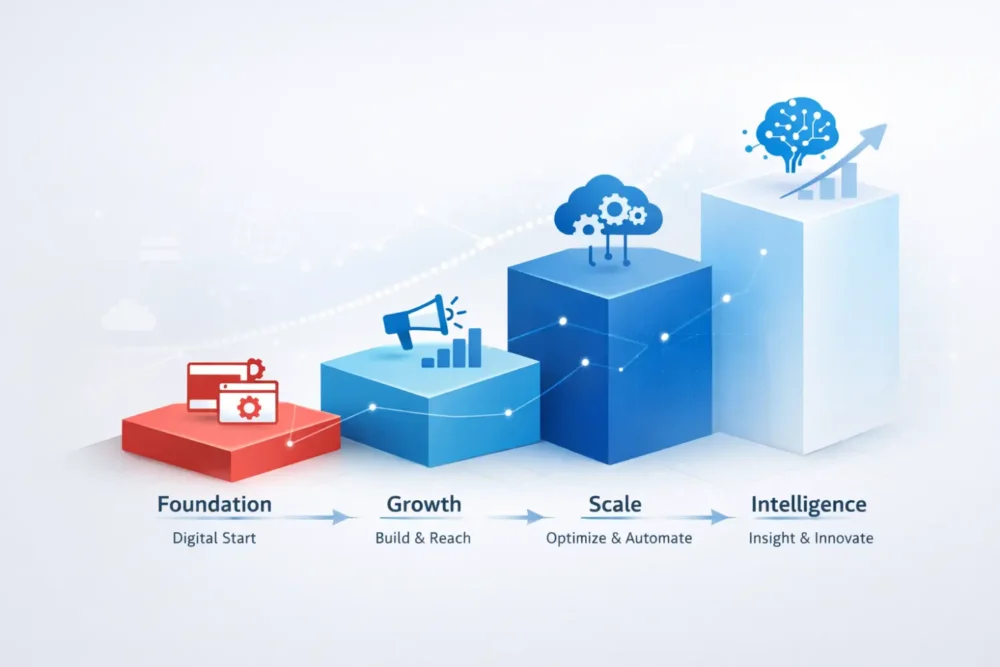
Once that structure starts to come together, the difference is usually felt in how the business operates day to day rather than in any one system changing dramatically. Things begin to feel more connected, with information moving more consistently between systems and less reliance on people having to check, copy or piece things together just to understand what is going on.
The way work flows through the business becomes easier to follow, because there is a clearer path from one stage to the next, and that consistency makes it much easier for different people to pick things up and work in the same way.
From a visibility point of view, it becomes far simpler to see where things stand, whether that is across customers, opportunities or ongoing work, because the information reflects what is happening rather than a version of it that sits in different places. That doesn’t mean everything becomes perfect overnight, but it does mean that the business is no longer relying on workarounds to keep things moving, and more of the effort goes into progressing work rather than managing the gaps between systems.
Where This Leaves You
Once you start to look at the business through that lens, the importance of operational infrastructure becomes much clearer, as something that directly influences how the business performs as it continues to grow. It shapes how reliably opportunities are managed, how consistently work is delivered and how easy it is to understand what is happening across the business without having to interpret or piece information together. It also creates a foundation that allows improvements to be made with confidence, because changes to systems, processes or ways of working can be introduced into something that is already structured, rather than layered onto something that is still evolving.
With operational infrastructure in place, the business has a way of absorbing that growth, maintaining consistency and continuing to operate in a way that supports both performance and visibility. This is the point that attention shifts away from reacting to how the business is operating today, and towards shaping how it can operate as it continues to move forward.
What This Looks Like in Practice
If you look at how this plays out in practice, it usually becomes most visible when the business has to operate without relying on a particular individual to hold things together.
Something as simple as someone going on holiday can highlight it. Work doesn’t stop, but it often slows down, because understanding what is in progress, what has already been done and what needs to happen next isn’t always immediately clear without going back through emails, spreadsheets or different systems to piece it together.
The same pattern tends to appear when someone is off sick or moves on from the business. The work itself is still there, but more time is spent working out where things are than actually progressing them, because the way it has been managed has been shaped around how that individual works rather than how the business operates as a whole.
You see it in sales, delivery and day-to-day operations. Conversations are happening, opportunities are moving forward and work is being completed, but if that person isn’t there, it becomes harder than it should be to pick things up and carry on without disruption. What it really comes down to is whether the business is set up to operate consistently, or whether it relies on individuals to bridge the gaps between systems, processes and information.
What You Can Expect by Implementing Robust Operational Infrastructure
When that structure is put in place properly, the difference is usually felt quite quickly.
Using the same example, if someone goes on holiday, the work doesn’t pause or slow down, because everything that needs to be known is already in the system, and someone else can step in and carry on without having to piece things together. The same applies when people leave or roles change.
Knowledge doesn’t walk out of the business with them, because it’s been built into the way the business operates rather than sitting with individuals.
From a commercial point of view, that has a direct impact.
Opportunities are less likely to be missed because follow-ups are visible and consistent. Conversations don’t stall because someone isn’t there to progress them, and the overall flow from enquiry through to revenue becomes more reliable.
Even small improvements here add up.
If follow-ups happen more consistently, conversion improves. If less time is spent checking and chasing information, the team has more time to focus on progressing work. Over time, that shows up not just in efficiency, but in revenue and in how easy the business is to manage as it continues to grow.