Targeting the 30% of daily workloads that can be automated is the fastest way to scale a company without breaking its operations. The automation of business shifts founders away from acting as the primary bottleneck and builds a foundation that runs independently.
At Nexus 360, we spend our time reverse-engineering roadmaps for ambitious SMEs. We see growth create complexity faster than a company can build structure. Disconnected tools and fragmented spreadsheets drain margins. By applying enterprise principles to the SME market, you can connect finance, operations, and resource planning into a single operating model. Operating across the UK, we bring structured thinking to local businesses across Leeds, Sheffield, Doncaster, Nottingham and beyond. This guide explains how to move away from isolated symptoms and build systems designed for long-term stability.
Defining the core systems behind the automation of business
Before buying software, you must understand the different categories of operational technology. Many companies confuse process management with software deployment. This confusion leads to expensive mistakes.
Business Process Automation (BPA)
BPA focuses on routing information and connecting different software platforms to complete a full workflow. This might involve automatically sending a contract to a client when a deal moves to a specific stage in your pipeline.
Robotic Process Automation (RPA)
RPA handles repetitive, rule-based tasks by mimicking human keystrokes. If your team spends hours copying invoice data from a PDF into an accounting system, an RPA bot can execute that exact sequence without human intervention.
Intelligent Document Processing (IDP)
IDP converts unstructured text into structured digital data. When you receive handwritten forms or scanned vendor invoices, IDP extracts the relevant numbers and feeds them directly into your database.
Business Process Management (BPM)
BPM is not a software tool. It is an operational discipline. It involves mapping, analysing, and improving processes before you apply technology. Automating a broken process only makes it fail faster.
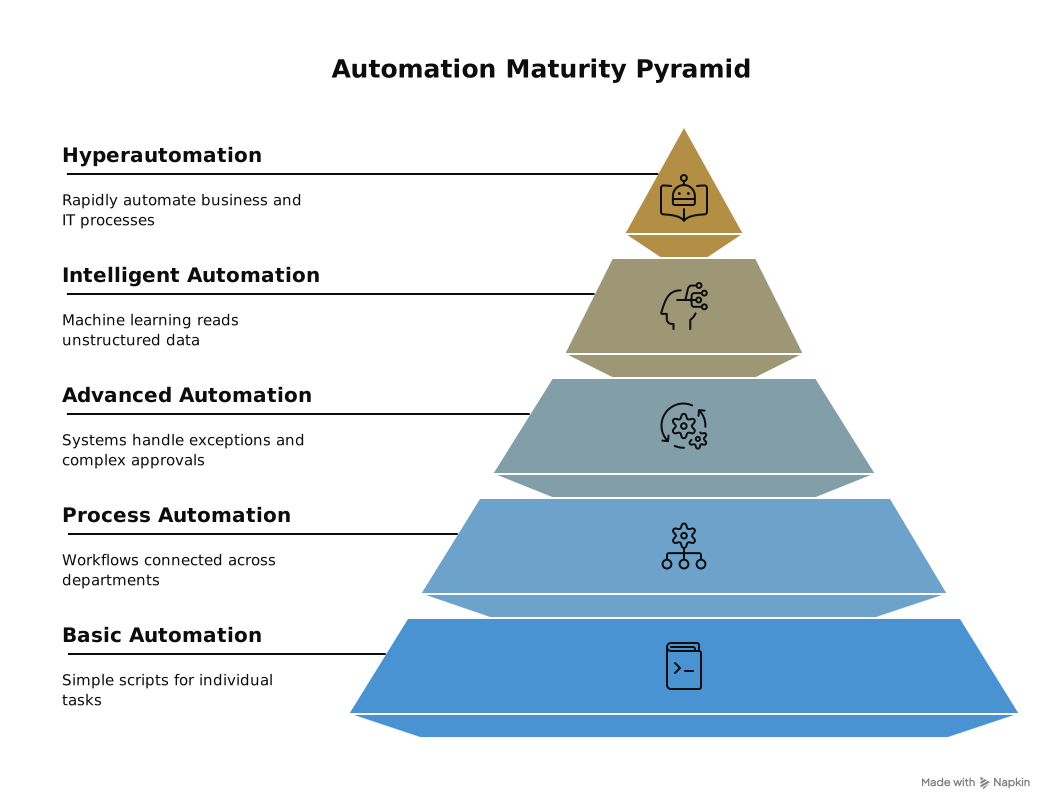
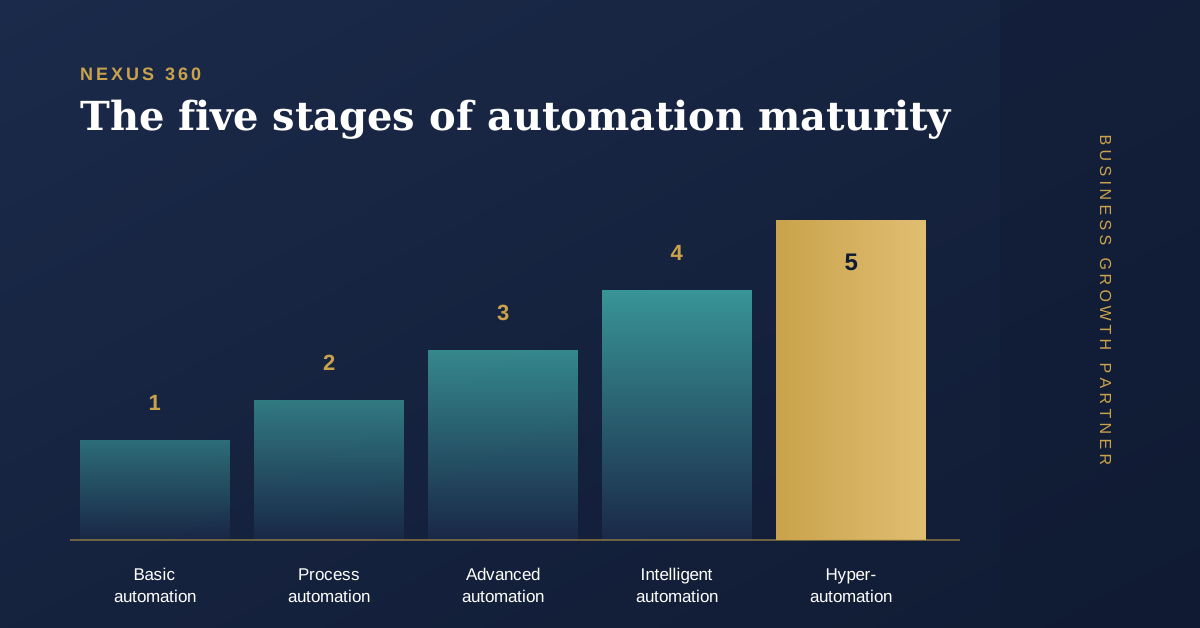
The five stages of automation maturity
Companies progress through distinct tiers of operational capability on their way from manual spreadsheets to advanced automation. Making that jump in one move is rarely wise, since introducing a lot of change all at once is often counterproductive. Evaluating which tier your business currently sits in dictates which tools you should implement next. This is something that we at Nexus 360 work closely with you to evaluate.
- Basic automation: Simple scripts and native integrations handle individual tasks, such as email auto-responders.
- Process automation: Entire workflows are connected across multiple departments, linking sales data to fulfilment queues.
- Advanced automation: Systems begin to handle exceptions and route complex approvals without manual sorting.
- Intelligent automation: Machine learning components read unstructured data, such as extracting specific clauses from varied vendor contracts.
- Hyper automation: The organisation adopts a disciplined approach to rapidly identify, vet, and automate as many business and IT processes as possible.
How to calculate the financial impact of your investment
Most enterprise resources ignore the specific financial realities of small to medium-sized businesses. You need concrete ROI calculation frameworks to measure the impact of your investments. We use a specific methodology to track these returns.
Our Growth Equation tracks six core formulas and twelve performance indicators. We have found that a 10% improvement across all operational levers can generate a 33% revenue uplift. You calculate ROI by measuring the hours saved per week, multiplying that by the hourly wage of the staff involved, and comparing it against the monthly cost of the software.
You must also factor in error reduction. Manual data entry carries a high error rate. Fixing those errors costs time and damages client trust. When you automate data transfer between your CRM and your finance software, you eliminate the cost of rework.
The methodology
We approach system design through a methodology called Growth Architecture. This process follows a strict three-step sequence: Understand, Design, and Build.
1. We begin with a Discovery Workshop to map the current state of the business, including revenue targets and operational gaps.
2. Design – During the design phase, we create a sequenced roadmap that protects existing operations while introducing change. You cannot pause your business to install new software.
3. Implementation – The implementation phase is hands-on, involving the construction or connection of unified platforms that allows business processes to flow seamlessly across finance, operations, resource planning and more.
This structured thinking is typically reserved for large corporations. We bring these 25 years of enterprise-level delivery experience directly to the SME market. We have supported over 40 SMEs across more than ten sectors, including automotive, finance, education, hospitality, and professional services. Reading about how Nexus 360 works shows how this approach differs from agencies that just sell software subscriptions.
An eight-step implementation guide for the automation of business
Successful deployments follow a predictable path. Skipping steps leads to fragmented systems and low adoption rates.
1
Conduct a thorough assessment of current workflows to pinpoint bottlenecks.
2
Define clear operational goals and revenue targets.
3
Map the ideal client journey to ensure technology serves the customer experience.
4
Select the right unified platforms for your specific industry.
5
Design the data architecture so information flows logically between departments.
6
Build and test the integrations in a sandbox environment to protect live data.
7
Train the team on the new operating model.
8
Monitor performance and refine the workflows based on user feedback.
Building a low-cost automation stack for growing companies
Many top-ranking enterprise guides recommend platforms that cost tens of thousands of pounds per month. This is not realistic for a 40-person manufacturing firm or a regional professional services company. You need a low-cost tool stack that still provides enterprise-grade connectivity.
We focus on moving businesses away from disconnected tools. The hidden cost of disconnected business systems includes lost data, duplicate entry, and poor visibility. Instead, we build around centralised platforms.
For many UK businesses, we act as a GoHighLevel consultant or general CRM consultants. The platforms consolidating marketing, sales, and client communication into one interface. When you combine a strong CRM with dedicated automation and workflow tools, you create a connected operating model that scales. Connecting your CRM to your ERP and business systems ensures that when a sale closes, the warehouse immediately knows to allocate stock.
Managing the human element during operational change
Detailed change management strategies are essential for handling employee pushback and retraining during software rollouts. Technology does not replace your team. It removes the repetitive tasks that drain their energy.
A 2024 McKinsey study found that most employees who reported time savings from automation used that additional time to work on new activities. When you remove manual data entry, your sales team can spend more time speaking with prospects. Your finance team can focus on forecasting rather than chasing receipts.
You must communicate this benefit clearly to your staff. Show them how the new systems will make their daily jobs easier. Provide comprehensive training and designate internal champions who can answer questions on the floor.
The future of operations: Agentic AI and autonomous systems
The market for business technology is shifting from rule-based scripts to autonomous agents. Agentic AI is the next phase of automation. Instead of just following a strict set of instructions, these AI agents can understand a goal, formulate a plan, and execute multiple steps across different software platforms to achieve it.
Enterprise adoption is already widespread. Microsoft reported that nearly 70% of Fortune 500 companies use Microsoft 365 Copilot for email search and note taking. IBM reports reaching 85,000 users with over 2,000 AI assistants and agents, delivering up to 50% productivity gains through partnerships with major software providers.
While these tools started in the enterprise space, they are rapidly becoming available to SMEs. Integrating AI into your digital engagement strategy allows you to provide instant, accurate responses to client inquiries without increasing headcount.
Frequently asked questions about business systems
Will automation increase the value of my business?
Yes. Buyers look for companies that can operate without the founder. Documented, automated processes reduce risk for potential acquirers. You can read more about how automation increases business value in our detailed breakdown.
How much does CRM and automation cost for a business like mine?
Costs vary based on your structural maturity and user count. However, the cost of doing nothing is often higher due to lost efficiency. We provide a framework to help you understand how much CRM and automation costs based on your specific sector.
Do small businesses need a CRM?
If you have more than a handful of clients, you need a system of record. Relying on memory or spreadsheets leads to missed opportunities. We strongly advise exploring why small businesses need a CRM to protect their client relationships.
Where do you start when business systems are harder to manage?
You start with a discovery phase to audit your current tools. Stop buying new software until you know exactly what you already have. We guide clients through where to start when systems become unmanageable.
Next steps for your operational infrastructure
The automation of business is not about buying the most expensive software on the market. It is about applying structured thinking to your daily operations. By moving away from fragmented apps and building a connected operating model, you give your company the foundation it needs to scale. If you are tired of acting as the primary bottleneck in your own company, it is time to review your operational infrastructure. You can contact us to schedule a Discovery Workshop and begin designing a roadmap that protects your margins while driving sustainable growth.